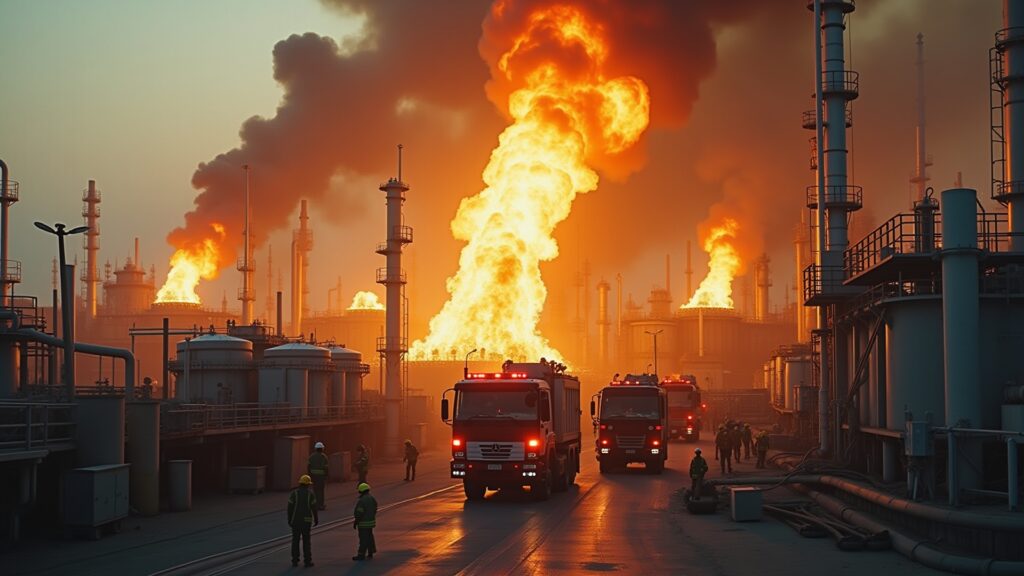
The recent massive fire at a chemical manufacturing unit in Sangareddy, Telangana, demands your immediate attention if you operate within India’s industrial chemicals landscape. This incident is more than a localized disruption—it throws into sharp relief vulnerabilities that can ripple across your supply chains, operational costs, and strategic planning horizons. For you, whether a chemicals manufacturer, investor, or policymaker, understanding these implications is critical to securing your business continuity and long-term competitiveness.
Why This Matters to You
When a key industrial chemicals facility suffers extensive damage, the shockwaves are felt beyond its physical boundaries. You face heightened risks of supply shortages, price volatility, and compliance scrutiny, all of which can directly impact your bottom line. With India striving to build its stature as a global chemicals production hub, such incidents underscore pressing challenges you must address—from operational risk management to regulatory adherence. Your strategic decisions today must incorporate these lessons if you aim to thrive amid increasing global complexity.
What Is Happening at Sangareddy?
The fire, consuming a major production unit, led to significant operational downtime and exposed critical safety gaps. While immediate damage assessment is ongoing, the disruption affects not only the plant’s output but also the broader value chain feeding into adjacent industries. This incident reflects the ongoing challenge for many Indian chemical manufacturers: balancing rapid capacity expansion against the necessity for rigorous safety protocols and risk mitigation infrastructure.
Key Business and Market Impacts
- Production and Capacity Disruption: Sudden loss of output pressures supply commitments and may delay deliveries to domestic and export markets.
- Supply Chain Fragility: With global feedstock volatility and logistical challenges, your supply chain resilience is tested, particularly as you explore China+1 sourcing strategies.
- Regulatory and Safety Scrutiny: Expect intensified enforcement of safety standards, compelling you to upgrade facilities and compliance processes.
- Reputational Risks: Customer confidence hinges on your ability to demonstrate reliability and operational prudence.
- Investment Reconsideration: Investors will prioritize firms with robust risk management, favoring those integrating digital monitoring and advanced fire prevention technologies.
Strategic Insight: Navigating Complexity in Chemical Manufacturing
Your response to this incident should go beyond crisis management. It invites strategic reevaluation focused on:
- Operational Risk Frameworks: Developing comprehensive safety protocols and digital process controls to preempt industrial hazards.
- Supply Chain Agility: Crafting diversified sourcing plans with embedded redundancy that insulate against raw material disruptions and logistic challenges.
- Technology and Innovation Investment: Prioritizing process automation, predictive maintenance, and emergency response systems that secure continuous operations.
- Policy Engagement: Active collaboration with regulators to shape practical safety standards while advocating for development of integrated chemical parks.
“In the chemicals industry, resilience is built as much through procurement and process discipline as through scale.”
Practical Takeaways for You and Your Business
- Understand the Cost of Safety Neglect: Accidents can exponentially increase operational costs and erode investor confidence.
- Monitor Supply Chain Vulnerabilities: Stay alert to feedstock price swings and logistics risks; reposition your sourcing accordingly.
- Invest in Digital and Physical Safeguards: Leverage advanced fire detection and containment technologies alongside digital monitoring to reduce risks.
- Reassess Export Strategies: Evaluate how production disruptions could affect your export commitments and market positioning.
- Engage in Policy Dialogue: Participate in industry forums advocating for infrastructure investment and safety standard harmonization.
“The real edge is not only in producing more, but in producing smarter, cleaner, and closer to where demand is shifting.”
Risks and Challenges Ahead
While addressing immediate damage and resuming production is paramount, you must also brace for longer-term challenges:
- Heightened Compliance Costs: Regulatory tightening may escalate your operational expenses.
- Insurance and Liability Concerns: Higher premiums and risk assessments could impact your financial planning.
- Market Trust and Contractual Risks: Failure to promptly restore supply can jeopardize existing contracts and customer loyalty.
- Changing Industry Dynamics: Increasing demands for green chemistry and sustainability add layers to your operational complexity.
What You Should Watch Next
Keep a close eye on how regulatory bodies respond with new policies or enforcement actions affecting chemical parks across India. Track investment flows into safety upgrading projects and emerging technology adoption within the sector. Monitor global feedstock price trends and logistical developments that could compound the supplier risk revealed by the Sangareddy fire. Finally, observe how firms pivot their manufacturing strategy—whether towards consolidation, diversification, or digital transformation—to mitigate similar risks.
Conclusion: Sangareddy Fire’s Strategic Signal for India’s Chemicals Sector
The Sangareddy chemical unit fire impact sends a clear message to you and the broader industrial chemicals ecosystem: resilience is a fundamental strategic asset, not an optional extra. Your approach must integrate rigorous safety management, supply chain agility, and ongoing technology investment. In doing so, you do more than mitigate risk—you strengthen India’s position as a reliable, globally competitive chemicals hub. This incident, while challenging, offers a crucial opportunity to embed durability and foresight at the heart of your chemical manufacturing strategy.
“When feedstock strategy, manufacturing efficiency, and market timing align, chemicals growth becomes far more defensible.”