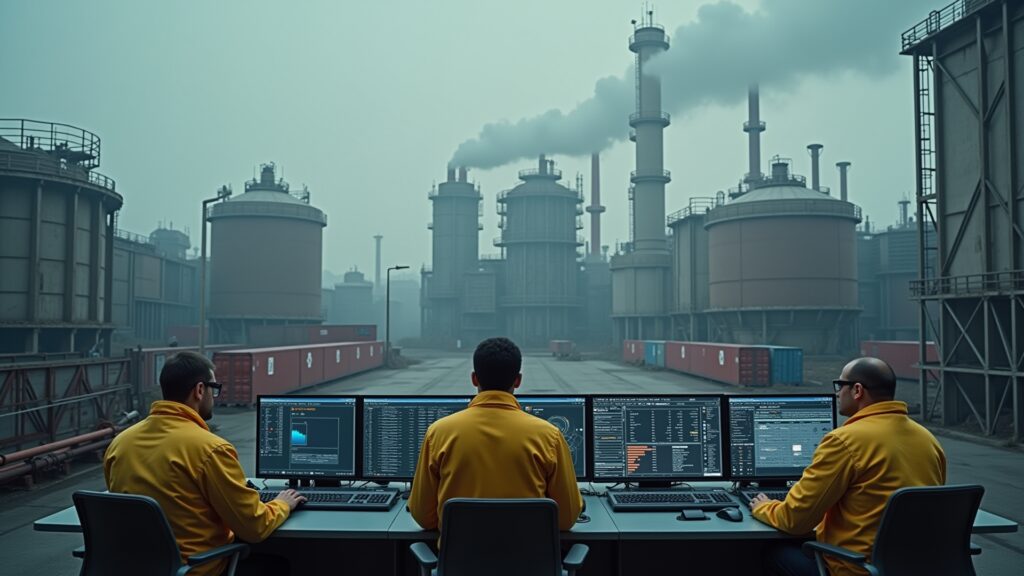
As a decision-maker immersed in the chemicals business, you stand at a pivotal point in India’s chemical industry evolution. The forces shaping the sector today—global supply disruptions, shifting feedstock economics, rising demand for specialty chemicals, and sustainability imperatives—are not mere background noise but decisive factors defining your strategic choices. Understanding how to lead through these challenges directly impacts your company’s competitiveness, growth trajectory, and relevance on the global stage.
Why This Matters to You
Your leadership in chemicals is increasingly tested by unpredictable global headwinds that influence sourcing, manufacturing, and market access. The Indian chemical industry, long characterized by its growing scale and export potential, now faces a new playbook. In this environment, your ability to navigate supply chain complexities, leverage India’s domestic advantages, and pioneer sustainable manufacturing will be the differentiator between stagnation and market leadership.
Current Landscape: Challenges and Opportunities
India’s chemical industry is confronted with significant external pressures. Global supply chain disruptions have elevated costs and led to uncertainties in feedstock availability. Commodity petrochemical prices fluctuate sharply, affecting margins and capital deployment decisions. Meanwhile, international trade realignments, including the China+1 sourcing strategy pursued by global buyers, offer India a strategic opportunity to capture enhanced export market share.
Domestic demand, fueled by sectors like automotive, construction, textiles, and pharmaceuticals, remains robust but increasingly sophisticated. Specialty chemicals, with their higher value-add and tailored applications, are central to this growth narrative. This realignment demands not only capacity expansion but focused innovation and operational agility to outperform competitors regionally and globally.
Key Business Impacts: Strategic Imperatives for Your Chemical Enterprise
To translate these macro shifts into actionable advantage, you must lead with clarity on several fronts:
- Operational Resilience through Innovation: Invest decisively in process innovation and digital transformation to enhance efficiency, reduce waste, and improve resource utilization. Technologies such as advanced analytics, AI-driven supply chain optimization, and process automation are no longer optional.
- Localization and Infrastructure Development: Support expansion into chemical parks and integrated industrial hubs which can provide logistical efficiencies, reduce freight costs, and improve compliance with evolving environmental regulations.
- Alignment with Trade Dynamics: Synchronize capacity expansion and product portfolio strategy with global realignments like the China+1 approach, ensuring your operations are attuned to new trade flows and customer preferences.
- Sustainability as Strategy: Embed green chemistry principles and circular economy practices to reduce environmental footprint while gaining access to ESG-focused capital and premium global partnerships.
Strengthening Your Supply Chain and Export Competitiveness
In today’s volatile trade environment, supply chain resilience has become a cornerstone of competitiveness. You will benefit from diversifying feedstock sourcing domestically and across alternative geographies to mitigate risk. Investing in localized procurement strategies also enhances your control over costs and quality.
Integrated chemical park infrastructures, supported by favorable government policies, can enable streamlined logistics and foster cluster synergies. This is crucial both for cost efficiencies and for meeting compliance standards that are increasingly stringent in export markets.
Driving Sustainable Growth through Circular Economy Principles
Transitioning from compliance-driven sustainability to innovation-led green chemistry will reshape your business model. Circular practices—such as waste valorization, recycling, and renewable feedstocks—offer both cost advantages and differentiation in the eyes of global customers and investors.
“Sustainability is no longer a peripheral agenda but a core strategic vector.”
Strategic Leadership: Navigating Your Path Forward
Your role as an industry leader demands anticipatory decision-making that blends disciplined capital allocation with transformative business models. Strategic mergers, partnerships, and diversification aligned to evolving market realities can enhance your competitive moat.
Moreover, operational excellence must be relentlessly pursued—not just through scale but through smarter, cleaner, proximity-driven production capabilities that reflect shifting end-use markets and regulatory standards.
“The real edge is not only in producing more, but in producing smarter, cleaner, and closer to where demand is shifting.”
Practical Takeaways for Chemical Industry Leadership
- Prioritize building resilience into your feedstock procurement and supply chain networks to weather price volatility and disruptions.
- Leverage digital tools aggressively for operational optimization and predictive decision-making.
- Target capacity expansions where India’s policy incentives and export demand align, especially within specialty chemicals.
- Invest in sustainability innovations that double as cost-saving and market differentiation strategies.
- Engage actively with government initiatives around chemical parks and export facilitation to maximize infrastructure and policy advantages.
Risks and Challenges Ahead
Despite these opportunities, you face risks including geopolitical tensions impacting trade flows, feedstock price unpredictability, and the pace of regulatory changes. Overextending capital without clear market signals or failing to adapt to sustainability requirements can erode profitability and strategic positioning.
Implementing agility in both strategy and execution will be critical to mitigate these risks and capitalize on India’s potential as a global chemicals hub.
What You Should Watch Next
Monitor developments in global trade policies, especially between India and major chemical markets like the US, EU, and ASEAN countries. Stay alert to innovations in green chemistry and circular industrial models gaining traction in your segments. Keep an eye on government announcements concerning chemical park expansions and infrastructure investments as these will provide key enablers for growth.
“When feedstock strategy, manufacturing efficiency, and market timing align, chemicals growth becomes far more defensible.”
Conclusion: Your Leadership as the Catalyst of India’s Chemical Industry Growth
Your ability to strategically navigate global headwinds will define the next chapter of India’s chemical industry. By investing thoughtfully in resilience, sustainability, and export-led growth, you can position your enterprise not just to survive but to lead on the international stage. The stakes are high and the window to act decisively is now—embracing strategic leadership will transform challenges into enduring possibilities.