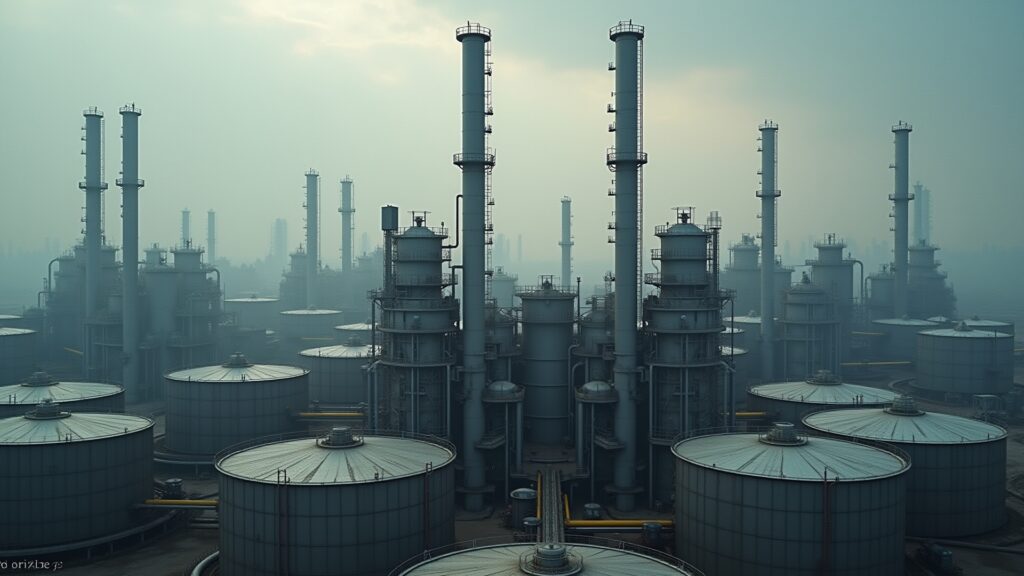
The recent sharp decline in Russia’s ammonium nitrate production is more than just a headline—it’s a critical indicator of evolving risks and strategic recalibrations in the global chemicals sector. As a key player in petrochemicals and specialty chemicals, your business must understand how this disruption, triggered by Ukraine’s targeted strikes on Russian industrial infrastructure, fundamentally shifts supply chain dynamics, market stability, and investment priorities across agrochemicals and industrial chemicals.
Why This Matters to You and Your Business
If your decisions touch on chemical manufacturing, procurement, exports, or investment, the Russia ammonium nitrate production decline directly challenges your sourcing security and cost forecasting. Ammonium nitrate is a vital input for fertilizer producers and numerous industrial applications, meaning any supply gap ripples through agricultural supply chains and downstream industries. This disruption underscores the importance of anticipating geopolitical risks and adjusting strategies to safeguard your margins and supply continuity.
Understanding What Is Happening
Ammonium nitrate’s strategic importance cannot be overstated: it forms the backbone of global fertilizer production and features prominently in industrial explosives. Russia has long held a significant position in its production and export, serving multiple markets worldwide. Now, Ukrainian deep strikes on critical production facilities have precipitated a steep plunge in output, exposing how geopolitical conflict can quickly translate into tangible supply shortages.
Key Business and Market Impacts
- Supply Chain Volatility: The immediate consequence is a tightening ammonium nitrate supply that exacerbates raw material scarcity amid steady demand. This elevates operational risks, especially for companies heavily reliant on Russian feedstock.
- Price and Margin Pressures: Feedstock volatility will likely inflate costs along the value chain, pushing fertilizer and industrial chemical prices upward. That surge compresses margins unless managed proactively through sourcing and efficiency.
- Geopolitical Price of Dependence: This event sharply illustrates the vulnerability of commodity chemical supply chains concentrated in geopolitically sensitive regions, urging a reassessment of risk tolerance and supplier diversification.
- Investment and Capacity Expansion: Emerging markets, including India, may accelerate domestic ammonium nitrate capacity development to reduce dependence on imports and enhance supply security, influencing global competitiveness dynamics.
- Regulatory and Sustainability Pressure: Disruptions impel policymakers and businesses alike to integrate supply chain resilience with sustainability ambitions by adopting cleaner, more circular chemical production models.
Deeper Strategic Insights
As a chemical industry leader, this scenario invites you to revisit your strategic footprint. Supply chain diversification—a growing imperative—must extend beyond the prevalent China+1 paradigm to incorporate alternative origins for critical feedstocks like ammonium nitrate. Consider how investing in local manufacturing and flexible production systems can buffer against geopolitical shocks.
Furthermore, enhancing supply chain transparency using digital transformation tools will equip your enterprise to detect disruptions early and pivot accordingly. Integrating sustainability into your process innovation not only addresses regulatory demands but also future-proofs your supply base by minimizing waste and improving resource efficiency.
“In the chemicals industry, resilience is built as much through procurement and process discipline as through scale.”
“The real edge is not only in producing more, but in producing smarter, cleaner, and closer to where demand is shifting.”
Actionable Takeaways for Chemicals Business Leaders
- Monitor geopolitical developments closely; anticipate potential supply disruptions beyond immediate crises.
- Reassess and diversify your ammonium nitrate sourcing portfolio to reduce exposure to any one region or supplier.
- Evaluate opportunities for local or regional capacity investments, especially in emerging markets that offer cost and strategic advantages.
- Incorporate sustainability criteria into supply chain and manufacturing decisions to align with evolving regulatory expectations and market trends.
- Leverage digital tools to enhance supply chain visibility and enable agile response mechanisms.
Risks and Challenges to Keep in Mind
While diversification and local capacity building are strategic imperatives, they come with challenges such as capital intensity, regulatory hurdles, and lead times. The chemicals sector must navigate volatile energy prices and raw material costs that complicate profitability. Additionally, overreliance on politically stable regions can still hold risks, requiring a balanced and flexible approach.
What You Should Watch Next
Stay attentive to developments in policy frameworks supporting chemical infrastructure investment and sustainability incentives across key markets such as India, Europe, and Southeast Asia. Watch for shifts in global trade flows and how competitors adapt their feedstock strategies. Pay special attention to technological advances in greener ammonium nitrate production and circular economy models that could redefine supply resilience.
Conclusion: Navigating Supply Risks in a Volatile Environment
The Russia ammonium nitrate production decline is a harbinger of strategic shifts every chemicals leader must factor into their playbook. Your capacity to adapt—through diversified sourcing, local manufacturing investments, and sustainability-driven innovation—will determine your enterprise’s resilience and competitive edge. This moment calls for refocusing from reactive crisis management to proactive, strategic agility to secure supply, drive profitable growth, and push for a more sustainable chemicals industry.
“When feedstock strategy, manufacturing efficiency, and market timing align, chemicals growth becomes far more defensible.”