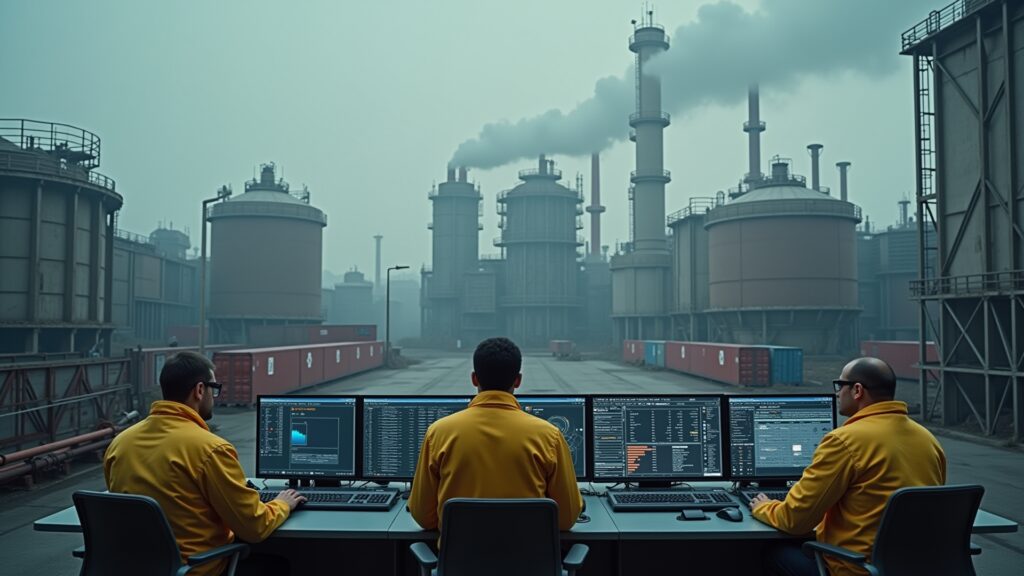
As a leader or investor in the chemicals industry, you cannot overlook the strategic significance behind ESG funds now including petrochemical companies in their portfolios. This marks a pivotal evolution in sustainable finance, challenging old assumptions and opening new pathways for growth, governance, and capital access within a traditionally high-emission sector. Understanding this shift equips you to navigate and leverage emerging sustainability trends that will define competitive advantage and resilience in chemicals and petrochemicals.
Why This Shift in ESG Inclusion Matters to You
The inclusion of petrochemical companies in ESG (Environmental, Social, and Governance) funds is not merely an investment footnote; it signals a recalibration in how sustainability is quantified and rewarded. For you, whether running a chemical manufacturing operation, managing exports, or formulating policy, this means that ESG frameworks are becoming more nuanced—acknowledging transitional strategies and genuine progress toward greener practices rather than relying solely on legacy emissions profiles.
This development impacts your access to capital, influences investor confidence, and shapes regulatory expectations. It underscores that petrochemical companies are increasingly seen as essential players in the sustainability transition, especially as they innovate in cleaner production methods, circular economy models, and governance transparency.
What Is Happening: The ESG-Petrochemical Nexus
Traditionally, ESG funds favored companies with clear environmental footprints—renewables, low emissions, and clean tech. The recent report by Green Central Banking highlights a trend where petrochemical companies, often regarded as high-carbon emitters, are now included in ESG portfolios. This reflects a growing recognition of their environmental reform efforts and forward-looking sustainability strategies.
For you as an industry stakeholder, this means that the ESG investment community is evolving to embrace transitional industries that demonstrate credible pathways toward reducing their environmental impact, improving social responsibility, and enhancing governance frameworks.
Key Business and Market Impacts to Consider
- Capital Access and Investment: Petrochemical companies engaged in sustainability initiatives may now tap green financing and attract long-term investors previously hesitant about traditional high-emission businesses.
- Manufacturing and Innovation: Aligning with ESG encourages you to integrate cleaner technologies and circular economy principles that deliver operational efficiencies, reduce feedstock and energy consumption, and position your plant expansions for future-proof markets.
- Export Competitiveness and Supply Chain Resilience: ESG inclusion emphasizes transparency and compliance, vital for meeting international regulations and leveraging emerging global diversification trends like the China+1 sourcing strategy.
- Policy and Regulatory Adaptations: Policymakers can draw insights from these ESG shifts to harmonize standards and foster sustainable chemical industrial parks that support economic and environmental goals simultaneously.
Strategic Insight: Navigating the ESG Landscape in Petrochemicals
Recognizing that ESG is no longer a polarizing term that excludes petrochemicals means you can confidently integrate sustainability into your core business models with strategic intent. This integration is crucial for enhancing profitability while responding to mounting global demands for environmental accountability.
You must balance legacy concerns about emissions with investments in green chemistry innovations, life-cycle analysis, and circularity. Embracing transparent governance practices will also strengthen your positioning within ESG frameworks, making your enterprise more attractive to diverse funding sources.
“The real edge is not only in producing more, but in producing smarter, cleaner, and closer to where demand is shifting.”
Practical Takeaways: What You Should Do Next
- Monitor ESG Fund Criteria: Stay informed on evolving ESG metrics that now value transitional progress and governance reforms, not just absolute emissions.
- Invest in Sustainable Technologies: Prioritize cleaner production, waste minimization, and circular initiatives that align with ESG expectations.
- Align Corporate Strategy: Embed sustainability deeply into business models to enhance investor appeal and export market access.
- Collaborate with Policymakers: Support development of harmonized ESG standards that reduce compliance fragmentation and bolster global competitiveness.
“When feedstock strategy, manufacturing efficiency, and market timing align, chemicals growth becomes far more defensible.”
Risks and Challenges to Navigate
While ESG inclusion signals opportunity, it also comes with challenges. You must guard against “greenwashing” accusations by ensuring that sustainability claims are credible and measurable. Regulatory landscapes could still experience fragmentation, creating uncertainty in compliance and reporting. Additionally, the capital-intensive nature of petrochemical transitions requires disciplined investment planning to maintain profitability during the shift.
What You Should Watch Next
Keep an eye on how ESG rating agencies refine their frameworks, especially around transitional industries like petrochemicals. Track regulatory developments globally that impact ESG compliance and reporting. Also, monitor global trade realignments and supply chain diversification strategies that influence petrochemical demand and investment flows.
Conclusion: ESG Funds Petrochemical Companies—A Strategic Imperative
For you operating in or investing in the chemicals industry, the inclusion of petrochemical companies in ESG funds is a watershed moment. It affirms the sector’s evolving role in sustainable industrial transformation and signals new pathways for investment, innovation, and market leadership. By embracing this nuanced ESG approach, you place your business in a stronger position to thrive amidst global sustainability demands and dynamic market conditions.
Integrate sustainability not as a compliance checkbox but as a strategic lever—balancing environmental stewardship with profitability and growth. That is how you future-proof your chemicals enterprise in today’s complex, interconnected global economy.
“In the chemicals industry, resilience is built as much through procurement and process discipline as through scale.”