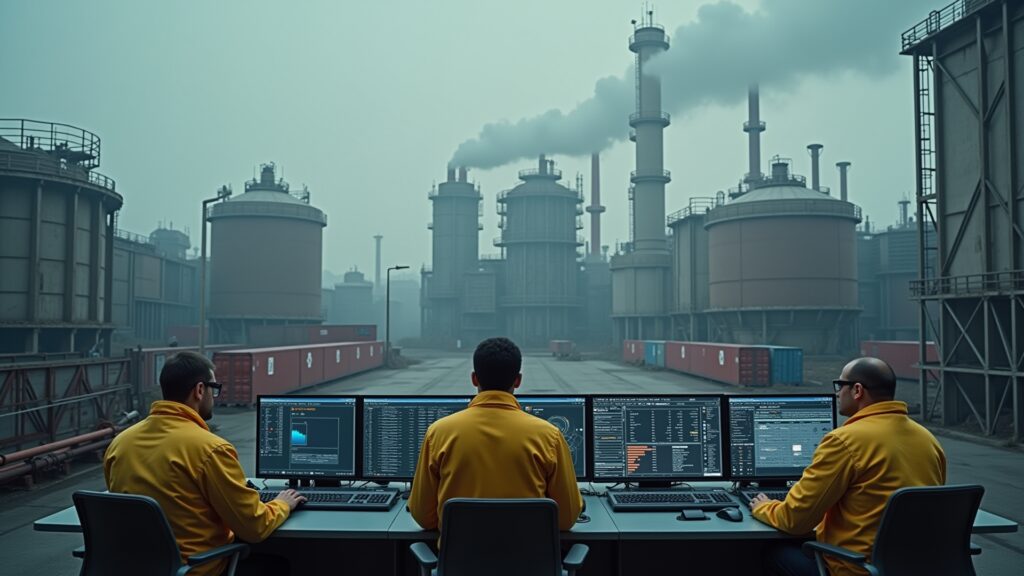
As you prepare your business strategy for fiscal year 2027, understanding the implications of sharp price volatility in India’s chemical industry is paramount. You’re confronting a landscape where feedstock costs, energy prices, and global demand are fluctuating unpredictably—factors that ripple through every facet of your operations, from procurement to market positioning. This volatility is not just a market phenomenon; it is a strategic inflection point that will test your agility, investment choices, and long-term competitiveness.
Why This Matters to You
Your decisions as a chemical industry leader or investor will determine whether the challenges of FY27 become costly setbacks or launching pads for growth. Volatile pricing directly affects your profit margins, complicates capacity utilization, and influences export competitiveness. If you operate in specialty chemicals, petrochemicals, or industrial chemicals, the swings in global supply chains and feedstock costs could reshape your cost structure and pricing power dramatically.
Moreover, energy cost unpredictability and regulatory shifts will push you to rethink production efficiency and sustainability. As a stakeholder, you need a clear view of these dynamics to anticipate market shifts, safeguard your supply chains, and harness emerging opportunities.
What Is Happening in FY27’s Chemical Industry Landscape?
Industry analytics from In-Ra signal FY27 as a period marked by notable instability in chemical prices, stemming from multiple convergent factors. Continued global supply chain disruptions remain a major driver, fueled by geopolitical tensions and shifting trade alliances. Energy prices—the cornerstone input for most chemical processes—are more erratic than in recent years, influenced heavily by volatile oil and gas markets.
Concurrently, shifting industrial demand patterns both in India and globally add a layer of unpredictability. Some sectors, such as automotive and construction, are grappling with inconsistent demand, which cascades into uneven orders for chemicals. Exporters face challenges as competitive positioning is vulnerable to pricing pressures and inset market volatility.
Key Strategic and Market Impacts You Need to Consider
Price volatility escalates risk across your entire business model:
- Feedstock Exposure: Dependence on imported raw materials increases vulnerability to foreign exchange and supply interruptions. This heightens the urgency to explore local sourcing and diversify suppliers under China+1 and regional diversification strategies.
- Energy Costs: Fluctuating energy prices necessitate investment in energy-efficient technologies and a stronger push toward green chemistry processes to curb operational costs and environmental risk.
- Contracting and Pricing: Unstable input costs challenge your ability to maintain predictable pricing contracts and margin stability, especially for specialty chemicals where price elasticity is highly sensitive.
- Export Competitiveness: Competitive pricing is eroded when global chemical prices swing; agile risk management in procurement, hedging, and supply chain resilience becomes non-negotiable.
Strategic Insight: Turning Volatility into Opportunity
When you grasp that volatility is a double-edged sword, your strategy can evolve from reactive to proactive. Prioritizing capital discipline and operational flexibility will enable you to adapt swiftly. Leveraging advanced technologies—digitalization, AI-driven forecasting, and process innovation—can help optimize production scheduling and cost management.
Policy incentives focused on infrastructure growth, such as chemical parks, and transparent pricing frameworks could mitigate some risks. Positioning your operations with these policy currents in mind can enhance resilience and growth potential.
“In the chemicals industry, resilience is built as much through procurement and process discipline as through scale.”
“The real edge is not only in producing more, but in producing smarter, cleaner, and closer to where demand is shifting.”
Practical Takeaways for Industry Leaders
- Prioritize supply chain diversification, reducing reliance on single-origin feedstocks.
- Invest in energy efficiency and green chemistry to counteract energy and cost volatility.
- Enhance digital capabilities for real-time price and demand forecasting to maintain agile operations.
- Develop flexible pricing models that can absorb fluctuations without sacrificing contract stability.
- Engage actively with policymakers to advocate for infrastructure and regulatory frameworks that support chemical sector resilience.
- Embed sustainability and circular economy principles to reduce feedstock dependency and improve resource efficiency.
Risk Factors and Challenges Ahead
Volatility inherently raises your exposure to margin pressure and investment risk. Overleveraging to expand capacity without addressing feedstock cost unpredictability can exacerbate losses. Additionally, failure to innovate in energy and process efficiency may leave you vulnerable to rising operational costs.
Exporters could face diminished competitiveness if global market realignments accelerate and your risk management is inadequate. Navigating these challenges requires proactive scenario planning and robust risk mitigation frameworks.
What You Should Watch Next
Keep a close eye on:
- Global geopolitical developments impacting trade flows and feedstock availability.
- Energy market trends, particularly in oil, gas, and renewables.
- Policy shifts on chemicals regulation, pricing transparency, and infrastructure support in India.
- Emerging technology adoption rates in production and supply chain digitalization.
- Demand fluctuations in key end-use sectors like automotive, construction, and pharmaceuticals.
Conclusion: Charting a Course Through FY27 Volatility
As FY27 unfolds with pronounced chemical industry price volatility, your strategic response will be critical. This volatility is not merely a challenge but a catalyst for transformation—an impetus to refine supply chains, deepen technological integration, and align investments with sustainability imperatives. By embracing agility, reinforcing operational discipline, and advocating for supportive policies, you can position your enterprise not just to withstand but to thrive amid uncertainty.
“When feedstock strategy, manufacturing efficiency, and market timing align, chemicals growth becomes far more defensible.” Harness this insight as you navigate FY27’s complex terrain and stake your claim in the evolving global chemicals marketplace.